Bite-sized Tips No. 1: Common Mistakes Part 1

Common Mistakes in Papers for Publication Part 1

Books 7The services I offer include editing papers for publication. As most of these have been written directly into English by Spanish university researchers, more often than not they contain a number of errors. In this first of what I hope will be many blog posts on the subject, I have highlighted ten mistakes which crop up again and again. I base my work on the New Oxford Style Manual, but I have also indicated the preference of The Chicago Manual of Style where this differs.
Continue reading

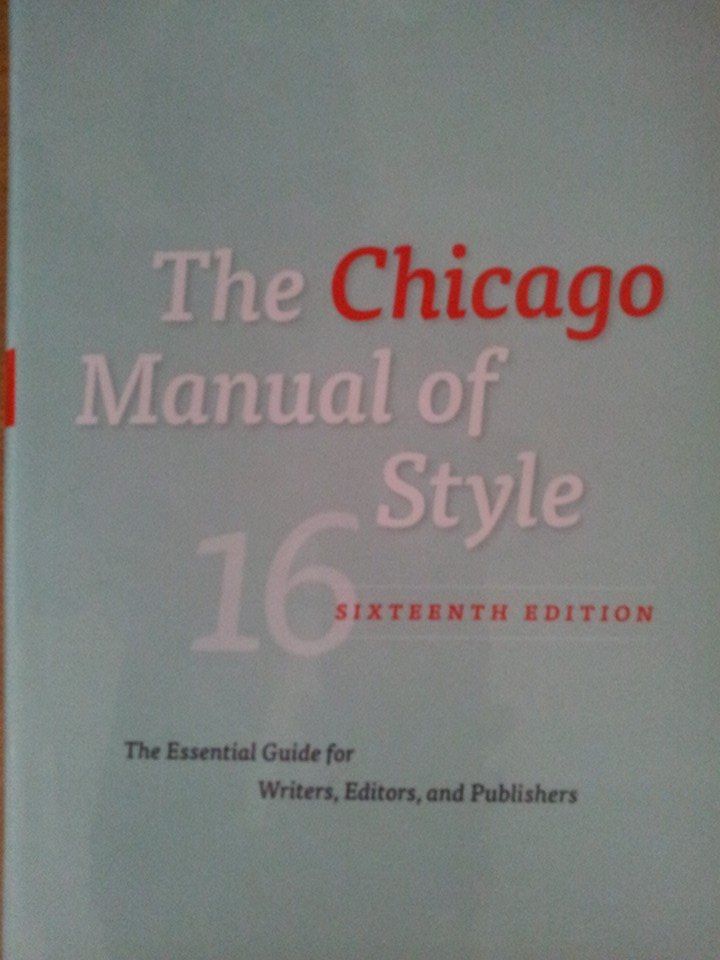
Books on My Shelves – The Chicago Manual of Style

The Chicago Manual of Style is a much thicker tome than New Hart’s Rules, the guide I normally use for my translation and editing work as it refers to UK English. Chicago’s index is also far more comprehensive than the index in the UK book and it is relatively simple to use.

However, it is far easier to turn to the online version of Chicago to find specific answers to queries quickly, even if you cannot see the full text unless you subscribe ($39 per year). Although it is handy to have a print copy of the book, when the next edition is published I will probably opt for online access.

Continue reading

Books on My Shelves – New Oxford Style Manual

The problem with revising or reviewing other’s translations or original work in English is that you need to justify any changes you make. This is easy when there is a simple mistranslation, or another phrase sounds better because it is less clunky or more common in the context in question. But there are many other occasions when proclaiming that your version is preferable without an explanation just won’t cut it. That’s where a style guide might come in handy.

Continue reading

Turn-of-the-year Reflections and Resolutions

DSCF3406In many respects, 2013 was quite a good year professionally. After spending many years chained to the house as a result of childcare duties, I was finally allowed a pass to attend my first ever conference (although that probably had a lot to do with the venue only being a few miles or so up the road). The conference also inspired me to get around to writing something for the blog at long last (my take on the IAPTI event in London). I had such a good time and found the experience so rewarding that I cannot wait to find an opportunity to escape again in 2014. There are quite a few events to choose from, and which one (or ones—I can live in hope) I end up at will no doubt depend on family circumstances, since we have quite a lot in the pipeline this year. Under consideration so far are:

Continue reading

Why you might regret not being on Facebook

IMG_0131I know. You have real friends. You don’t need to gather a bunch of virtual ones. Your family lives on your doorstep, or you visit, phone and Skype. As for using it as a business tool, why on earth would you want a professional page on a social networking site anyway? Besides, your work is going just swimmingly without all the extra promotion a Facebook page might—yes, it’s not guaranteed—provide. And you’ve undoubtedly got far better things do you with your time.

Continue reading

Hora de abrir los ojos

1531800_10202947244180441_863067870_nLa semana pasada acabé escribiendo una entrada motivada por una desagradable experiencia relacionada con la traducción automática (o, más bien, pseudotraducción automática) que quería compartir con todos vosotros. Esta semana me toca hablar de una nueva afrenta a nuestra profesión que por desgracia parece haberse vuelto bastante común a juzgar por las ofertas que recibo por correo electrónico y las entradas que leo en los foros.

Hablo de las herramientas TAO (traducción asistida por ordenador), los descuentos que se espera que ofrezcamos por usarlas y los ridículos plazos impuestos desde el convencimiento de que mejorarán nuestro rendimiento por arte de magia elevándolo a niveles que rozan lo sobrehumano.

Continue reading

Time to Get Real

1531800_10202947244180441_863067870_nLast week, I found myself suddenly rolling out a blog post because of an unpleasant experience involving machine translation (or should I say machine pseudo-translation), which I wanted to share with you all. This week I’m shaking my head at yet another affront to our profession, which sadly seems to have become rather commonplace judging by email job requests I receive and forum posts I read.

I’m talking about CAT tools, the discounts we’re expected to give as a result of using them, and the silly deadlines imposed in the belief they will magically improve our performance to near super-human levels.

Continue reading

El traductor de Google: Aviso a navegantes

IMG_3081Suelo revisar textos para publicación que han sido escritos directamente en inglés por hablantes no nativos (principalmente españoles, porque por lo general soy capaz de descifrar lo que intentan decir). Esta actividad me agrada bastante porque la temática es interesante, la redacción no está del todo mal y el trabajo no supone teclear demasiado, lo que mi brazo agradece ya que estoy empezando a sufrir de una lesión por tensión repetitiva.

Esta semana he tenido dos encargos de este tipo, y no podrían haber sido más distintos. El primer texto (y el más largo) era relativamente sencillo, pero el segundo contenía párrafos enteros en los que no logré entender absolutamente nada. Tras sudar tinta y dedicarle horas y horas, se lo envié a la agencia con comentarios pidiéndoles que me aclararan ciertos puntos y resaltando una buena cantidad de oraciones no solo gramaticalmente incorrectas, sino prácticamente imposibles de desentrañar.

Continue reading

Warning about Google Translate

IMG_3081I often edit texts for publication which have been written directly in English by non-native speakers (mainly Spaniards, because I can usually decipher what they are trying to say). This is an activity I mostly enjoy because the subject matters are interesting, the quality of the writing is normally not too bad, and the work doesn’t involve a great deal of typing (which gives my arm a rest as I’ve started to suffer from a repetitive strain injury).

This week I had two such jobs, and they couldn’t have been more varied. The first and longer text was relatively straight-forward, but the second contained large chunks that I just couldn’t get my head around at all. Having struggled to the end, I sent it back to the agency with comments, asking for clarification of certain points, and a fair number of highlighted sentences which were not only grammatically incorrect, but virtually incomprehensible to boot.

Continue reading

Las Validaciones de LinkedIn: ¿Un mal necesario?

923052_10202947256180741_548194734_nLas validaciones de LinkedIn llevan más de un año entre nosotros, y parece que a muchos traductores les entusiasma la idea. Son mucho más fáciles de dar que las recomendaciones, y con tanto do ut des como hay por ahí, coleccionar un montón de caras en el perfil no supone ningún esfuerzo y puede incluso resultar atractivo para ciertas personas, supongo.

No obstante, he de decir que no es una función que me apasione. Aún no me he subido al carro y no creo que lo haga en un futuro próximo, la verdad. Por eso he optado por no mostrar mis validaciones pese a haber recibido unas cuantas de las que me siento orgullosa.

Continue reading