
 After an overview of the initial results in part 1, in parts 2 and 3 we focused on comments made about the main survey questions.
Specifically in part 2 we examined whether the respondents were thinking of doing any of the four surveyed qualifications (MA/MSc, Diploma in Translation, ATA certification and ITI exam) and which of these four they thought was better.
In part 3 we looked at responses to three questions: Which of the four qualifications are more highly regarded by translators (1), by agencies (2) and by direct clients (3).
This fourth and final part of the results includes some general comments made at the end of the survey and also some insights given under the specific questions that I didn’t manage to fit into the previous three parts of the results as they are more wide-ranging.
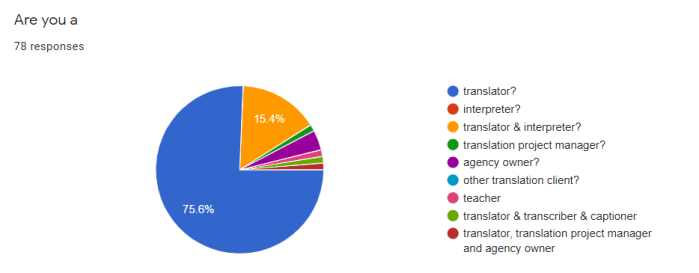 This is the third and penultimate part of the results of the translation qualifications survey, which focused on the DipTrans, MA/MSc, MITI exam and ATA certification.
 After being made redundant in the summer of 2016 from a non-language-based role with the Home Office, I decided that I finally wanted to return to using my languages regularly, rather than merely on holiday or for the occasional rendition. Translation, in particular, had always held an attraction and not just involving Modern Languages, as my Latin A level testifies. Translation had seemed a dream job and more realistic than my other illusion of becoming a professional snooker player.
 What made you choose London Met?
 Today’s MA course review has been written by my fellow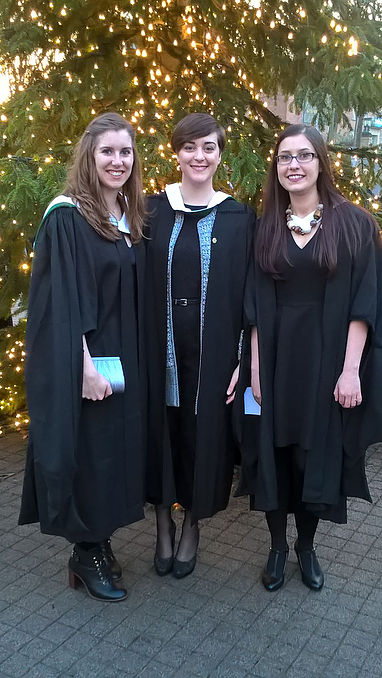
 I graduated from the University of Exeter with an MA in Translation in 2011. After submitting my dissertation, I remember feeling daunted at the prospect of starting my career as a freelance translator – how on Earth was I going to snap up my first client? It wasn’t until I started working at Amazon with colleagues who had completed MA Translation programmes at other universities that I realised how my degree gave me an advantage.
 I’d always planned to become a translator. The career seemed to fit my abilities and interests well so the die was cast on my academic path. The translation modules I did as part of my undergraduate degree in Modern Language Studies (French, Spanish and Dutch) only whetted my appetite further for continuing my study of translation. Then, as if almost by a stroke of fate, just as I was starting my final undergraduate year, the university’s Cultures, Languages and Area Studies department announced that they would be introducing a postgraduate programme in Translation Studies – with the option to study interpreting as a supplementary module. I leapt at the chance to apply for a place as soon as I could, and so began my
  As I sat on a boat to Hvar, Croatia, knowing that I wanted to leave my job and mulling over the options available to me, I had my lightbulb moment: “I know,” I thought, “I’ll go back to university to study for a Masters in translation.”
 Tranix Translation & Editing Services