
This guest post has been written by three former MACITS students at the University of Leeds and it forms part of the ongoing MA review series on this blog. If you would like to write a review of your MA, you’ll find more information and a complete list of all past guest posts here. This list includes two other reviews of MAs at Leeds.
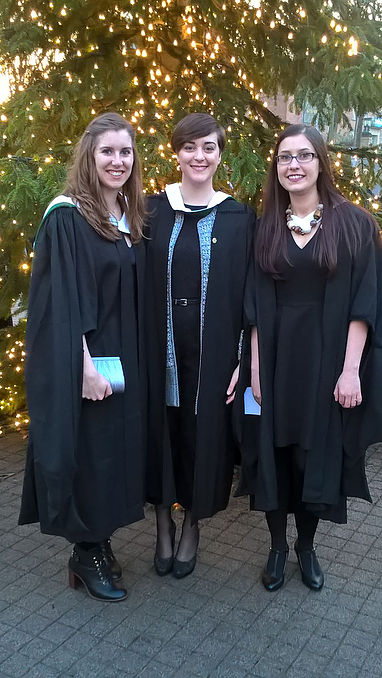
Eleanor Regin, Lara Fasoli and Miruna Georgescu met during their MA course in Conference Interpreting and Translation Studies (MACITS) at the University of Leeds (2015–2016). Eleanor was enrolled on the ACC course (French and Italian into English), while Miruna and Lara were enrolled on the Bidirectional course (Italian-English). After graduating, we started freelancing and decided to start co-writing a blog (Apertis Verbis). Miruna is currently a translation trainee at the Council of the European Union, and both Eleanor and Lara are working as freelancers. The trio share their thoughts on the MA at the University of Leeds and discuss some of the main features of the course.
 First, I’d like to welcome all new followers to my blog. In case you haven’t come across the
  This MA course review has been written by Alejandra J. Garcia Romero and edited by Deepti Limaye. For more information on MA courses and links to other reviews, see the
  Sometimes life throws you a curveball and the unthinkable happens: a family member is struck with a long-term illness and you suddenly have to take on the role of carer. Caring for a loved one can be physically and emotionally draining and as time-consuming as looking after a baby, but often with none of the happy milestones marking a transition from one phase to another. Not only does caring take huge bites out of your available work time, it often does not put you in the frame of mind to focus when you finally do manage to sit down at your desk.
 Back in February I managed to escape to London for the day to attend an
  I graduated from the University of Exeter with an MA in Translation in 2011. After submitting my dissertation, I remember feeling daunted at the prospect of starting my career as a freelance translator – how on Earth was I going to snap up my first client? It wasn’t until I started working at Amazon with colleagues who had completed MA Translation programmes at other universities that I realised how my degree gave me an advantage.
 During my translation work I often come across words that the author has put in italics, quotations marks, or in italics within quotation marks. And often the way they use them throughout the text is inconsistent.
 Today’s guest post is by Lucy Williams and was originally published on her own blog. As it is currently not available on her site, Lucy has kindly given me permission to reproduce two of her posts on the DipTrans on My Words for a Change since they contain valuable information for anyone thinking of taking the exam.
 Today’s guest post is by Lucy Williams and was originally published on her own blog. As it is currently not available on her site, Lucy has kindly given me permission to reproduce two of her posts on the DipTrans on My Words for a Change since they contain valuable information for anyone thinking of taking the exam.
 Tranix Translation & Editing Services