Bite-sized Tips No. 17: Spellings Part 13 – Some that might trip you up

Spellings Part 13 – Some that might trip you up

ArrowsToday we look at another ten spellings, based on the New Oxford Style Manual, which can cause some confusion. Sometimes people add hyphens when they’re not necessary, and other times they leave them out and write the term as two words when it should really be hyphenated. I hope today’s post will confirm what you already know and/or prove useful. All of today’s spellings can be found in the New Oxford Spelling Dictionary, and most  also appear in the New Oxford Dictionary for Writers and Editors, which occasionally provides a brief comment on the spelling rule.

Continue reading

Help! Everyone’s at a conference except me (or how to still get a dose of CPD)

Don’t fret. While it might feel like that sometimes judging by your social media feeds, it’s far from the truth. And however tempting it might be to jet off to enjoy quality time with your colleagues, perhaps you could spend the considerable sum involved in attending a conference more wisely. Not only are there plenty of things you can be getting on with to ensure you get your dose of CPD (continuing professional development), they will probably also be better for you in the long-term and look far more impressive on your CV.

Continue reading

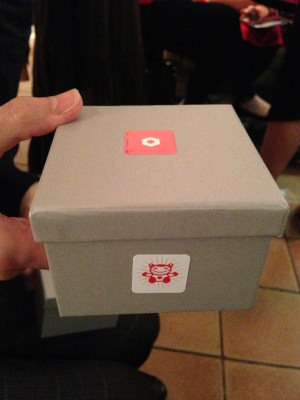
Review of The Freelance Box

Freelance Box 2The Freelance what? For the uninitiated, The Freelance Box, or TFB, is a series of half-day, in-person business and marketing courses offered by Valeria Aliperta of Rainy London Translations and Marta Stelmaszak of Want Words.

Although TFB is based in London, it has travelled as far afield as Madrid and Bratislava. The beauty of these events is that they come to you.

Well, in theory they do. Being a rather determined, dedicated and ‘nothing is getting in my way’ kind of girl, I didn’t think anything of hopping on the Glasgow to London train for TFB launch event.

After stumbling around the City trying to get my bearings, I eventually found the venue. Twitter 1 – 0 Google Maps.

Continue reading

La última tendencia en la industria de la traducción: PEMT

PEMT2¿Han escuchado hablar sobre la última tendencia en la industria de la traducción? Se la conoce como PEMT, significa traducción automática con revisión posterior (post-editing machine translation, PEMT*). Hace referencia a cuando los clientes usan un programa para traducir un texto antes de enviárselo a un traductor para que este haga la revisión final. Algunos clientes usan herramientas de traducción automática (TA) más sofisticadas que las que se ofrecen en línea. Sin embargo, según mi experiencia, el Traductor de Google es la herramienta de traducción más popular y, por ese motivo, la que los clientes usan con más frecuencia para obtener una traducción por el precio de una revisión, en general, alrededor de un 50 % menos del costo.

Continue reading

Bite-sized Tips No. 16: Times

Times

Bournemouth2This is a stylistic minefield and the most important aspect to remember is to be consistent throughout your document and in all the documents for a particular client. If you are ever asked to use a specific style guide, then this is an area you’ll definitely need to look up because there are so many variations. This post is going to focus on the recommendations in the New Oxford Style Manual and compare them with those found in The Chicago Manual of Style, so essentially the difference between UK and US usage.

Continue reading

Adverts on Translation Blogs – Survey Results

At the beginning of the year, on my travels through translation blogs in search of good articles to choose as the Posts of the Day, I noticed that more and more bloggers were showing ads. This got me thinking about whether I should try monetising my own blog. Before going ahead with such a radical change, however, I decided to gauge opinion with a survey, and learn more about the pros and cons of showing ads on translation blogs.

Continue reading

Posts of the Day – February 2015

Cottage6Despite originally hoping and promising on Twitter to continue the Posts of the Day until the end of April, unfortunately we are a third of the way through March already, no posts of the day have materialised so far this month, and I’m only just managing to find time to publish the February list of my favourite articles. Sadly this is a sign that this feature of my blog needs to come to an end for a while. As much as I enjoy reading colleagues’ thoughts and opinions, and will continue to do so and share on Twitter and Google+, finding a post of the day for every day of every month is a time-consuming task and one I can realistically no longer fit into my busy schedule. I have my eye on a number of courses I would like to complete within the next 18 months to improve my profile and my skills, and I need to finish the one I have already signed up for very soon before the deadline catches up with me. Several ideas for posts of my own are also clamouring for attention and a few hours to polish them off.

Continue reading

The Latest Trend in the Translation Industry: PEMT

PEMT2Have you heard of the latest trend in the translation industry? It’s called PEMT* and it stands for post-editing machine translation. This is when clients use a program to translate their text before sending it to a translator for the final edit. Some clients use more sophisticated MT (machine translation) than online offerings, but in my experience Google Translate is the most popular translation tool, and, therefore, the one clients use more often than not to get a translation for the price of a revision, usually around 50% of the cost.

Continue reading

The A to Z of Freelance Translation

A review of Nicole Y. Adam’s course The A to Z of Freelance Translation by Sylvia Lass

A to Z of Freelance Translation

Please note that Nicole Y. Adams no longer offers this course.

As the title suggests, the online course The A to Z of Freelance Translation by Nicole Y. Adams is mainly aimed at freelance translators in their first year of self-employment, or translators who are planning to become self-employed in the near future.

There are 15 lessons in total, dealing with various topics related to launching a freelance career. After registering, participants get lifetime access to the entire course contents and can work through them in any order they like and at their own pace. The course setup is very flexible, so you can interrupt at any time or jump back and forth between the different lessons. Even after completing the course, you continue to have access to all the materials (including any updates or newly added content).

Continue reading