
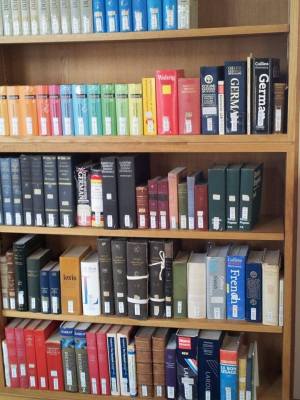
 Among the scores of posts published on translation blogs every day, very few manage to reach out and grab my full attention as much as Kevin Fernandez’s on The Open Mic. Provocatively entitled Why I Don’t Use Bilingual Dictionaries and Why You Shouldn’t Either, I knew I wasn’t going to agree with the content before I even started reading it. And although he softens the initial impact of his title by assuring us that he isn’t actually advocating that “we should never use them”, the beast had already been unleashed, sending everyone scurrying off to defend their respective corners.
I can appreciate that excessive use of a bilingual dictionary as a prop without exploring whether its suggestions are appropriate for the context in question is not helpful. This is especially true if you are a language student trying to get to grips with the intricacies of a language. But giving impressionable young professional translators the idea that it is wrong to even use a bilingual dictionary for their work is counterproductive.


 Today’s guest post is by Émilie Barbier and it is part of the

 When I was teaching English in France after my undergraduate degree, I did some translation work for a university and consequently decided that I wanted to pursue a career in the field. The MA in translating and interpreting at the University of Salford* really appealed to me due to its practical nature.
 My apologies for taking so long to get around to writing another Bite-sized Tips post. This one has been on my to-do list for a while, as have many others. In fact I could quite happily spend my entire working life writing for my blog were it not for the need to earn a living!
 Receiving a translation back covered in tracked changes and comments is never a nice experience because it mainly signals that the client is unhappy with your work. A mistake is a mistake and has to be owned up to and corrected. It’s something you have to learn from to improve your skills and ensure you don’t repeat. And you have to hope that the consequences won’t be too serious and that you don’t lose the client as a result.
 Tranix Translation & Editing Services