
 It’s survey time again on My Words for a Change. Back in 2015 I ran my first survey on adverts on translation blogs (TLDR: don’t have any adverts on your blogs!). The following year I ran one on revisions (thus combining two of my favourite subjects). I spared you all my intrusive questions in 2017 and last year I ran a survey on whether blogging is dead (TLDR: no, it isn’t yet, but it really depends on the blog).
This year I want to quizz you about qualifications. As you probably know if you’re a regular reader, lots of guest posters have written about their experiences of MAs and MScs in translation for this blog, and the vast majority of them have been positive. But taking out a year or two to study a degree at university, even if it’s a distance-learning course, isn’t an option for all of us.

 You have until 4 November to take advantage of special discounts to watch
 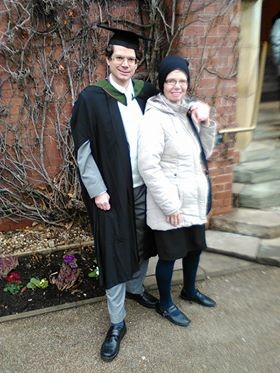 After being made redundant in the summer of 2016 from a non-language-based role with the Home Office, I decided that I finally wanted to return to using my languages regularly, rather than merely on holiday or for the occasional rendition. Translation, in particular, had always held an attraction and not just involving Modern Languages, as my Latin A level testifies. Translation had seemed a dream job and more realistic than my other illusion of becoming a professional snooker player.
 The Careers in Translation and Interpreting Conference in May 2013 at Aston University in Birmingham organised by Routes into Languages inspired me to apply for the MA Translation Theory & Practice at UCL as part of a career change. The application process was straightforward: BA (Hon) results of at least 2:1, IELTS (Academic) result of at least 7.6 and a written personal statement.
 Last week, after trying to attend one for ages, I finally managed to go to my first ever translation slam. If you don’t know what that is, you’re not alone. Although they’ve been happening for several years, they seem to have focused firstly on literary texts (which not many of us actually translate for a living) and/or been held at conferences that target a particular language pair (French and English in the “Translate in…” series) or that sell out quickly (MET, ITI).
 What made you choose London Met?
 Flexibility
 Tranix Translation & Editing Services