
 The word is out: having your translations revised is THE way to grow as a translator. If you continue to work in your bubble without any feedback, you’ll make the same mistakes again and again, your word choices will remain narrow, you’ll never learn to think outside the box and your translations might never ever sing.
“I am not sure that one gains too much useful knowledge from a course on revision. Experience of being revised (whether monolingually or via translation) and revising is what makes you a better revisor. The interaction involved in close translator/reviser collaborations on big projects can be an abundant source of learning.”
“I work in a team of three where one person translates, another revises the translation (and the translator accepts/rejects the changes) and a third colleague does a final proof. This system generally works well and we all learn from each other too.”
“My case is special, because we are essentially an in-house team (some of us off-site), working for a host of departments/divisions as our ‘clients’. We have the same cycle for nearly all projects: translator – content reviser – translator – language reviser – translator – final approval (head of team). Therefore the translator has the final say in what to accept or reject from the reviser’s changes. But again, it is generally based on discussion and consensus.”
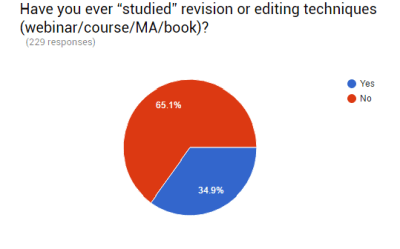 The very last question in my revisions survey (answered by 229 of the 232 people that filled it out) focused on finding out what, if any, training colleagues have in revision techniques. Out of the 80 people who responded yes to this question, 77 went on to give me the details (thank you!).
 The third section of the revision survey switched to focusing on the perceived quality of a revision and satisfaction with a reviser’s job. But it kicked off with asking respondents whether they were aware of the definitions of reviser and revision in the standard
  As we saw in
  Back in July and August I ran a
  This is just a quick post to ask you all if you could please complete the
  Tranix Translation & Editing Services